
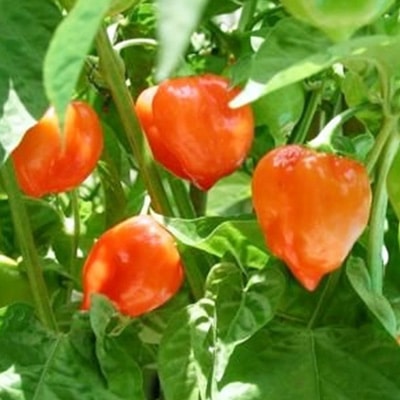
If you have ever wondered whether an Orange Habanero is really that much hotter than a Jalapeño, the short answer is yes. The difference is not subtle.
A typical Jalapeño falls in the range of 2,500 to 8,000 Scoville Heat Units, while an Orange Habanero typically measures between 160,000 and 260,000 SHUs. That means the lower end of the Orange Habanero range is already more than 20 times hotter than the upper end of the Jalapeño range. At the other extreme, an Orange Habanero at 260,000 SHUs can measure roughly 104 times hotter than a Jalapeño at 2,500 SHUs.
That is a remarkable difference for two peppers that can both find a place in salsa, sauces, marinades, pickled preparations, and everyday cooking. The reason this comparison matters is that consumers and product developers sometimes treat peppers as though their heat exists on a simple mild-to-hot ladder. It doesn’t. Heat level exists across a broad spectrum, and the Scoville rating gives us a useful way to understand just how wide that spectrum can be.
Also Read: The Habanero Pepper’s Triple Threat: Heat, Flavor, And Excitement!
What Does the Scoville Scale Actually Measure?
The Scoville Scale was developed to describe the pungency of chili peppers. In simple terms, SHUs indicate the concentration of capsaicinoids responsible for the burning sensation associated with hot peppers.
The original Scoville method relied on dilution and human taste testing. Modern laboratory analysis provides a much more precise approach by measuring the relevant compounds and translating those results into SHUs. That distinction matters when you see a number attached to a pepper. A Scoville rating should be viewed as a range rather than an absolute number stamped onto every individual pepper.
Consider an Orange Habanero. Saying it measures 160,000 to 260,000 SHUs does not mean every Orange Habanero sits neatly in the middle. Individual peppers can vary based on genetics, growing conditions, maturity, agricultural practices, and processing.
The same principle applies to Jalapeños and other Habanero varieties. A pepper’s reported range gives you a useful expectation, but it can’t predict the exact heat of every individual fruit.
Doing the Orange Habanero Scoville Math
The easiest way to understand the difference is to compare the extremes. Suppose you have a relatively mild Orange Habanero at 160,000 SHUs and a relatively hot Jalapeño at 8,000 SHUs. The Orange Habanero is still 20 times hotter.
Now reverse the comparison. An Orange Habanero at 260,000 SHUs compared with a Jalapeño at 2,500 SHUs is 104 times hotter. That is why saying an Orange Habanero is simply “a little hotter” than a Jalapeño dramatically understates the difference.
| Pepper | Typical Scoville Range |
|---|---|
| Jalapeño | 2,500 to 8,000 SHUs |
| Orange Habanero | 160,000 to 260,000 SHUs |
There is another useful way to look at the numbers. The entire Orange Habanero range sits above the entire typical Jalapeño range. For manufacturers, chefs, and consumers, this has an immediate formulation consequence. Substituting Orange Habanero for Jalapeño is not a simple one-for-one swap. The quantity needs to be reconsidered, particularly in concentrated forms such as powder, puree, or mash.
Why Can Two Habaneros Have Different Heat Levels?
This is where pepper science gets more interesting. Two Habanero peppers can come from the same general variety and still deliver noticeably different levels of spiciness. Genetics establish a broad potential range, but growing conditions influence where an individual pepper lands within that range.
Factors that Make a Difference
Soil conditions, soil temperatures, water availability, sunlight, plant stress, maturity, and other environmental variables can affect capsaicinoid production. The pepper’s stage of development also matters. A fully mature pepper can have a different flavor and chemical profile from one harvested earlier.
Right Sourcing Is Important
This explains why laboratory testing and controlled sourcing matter for commercial buyers. A food manufacturer developing a hot sauce can’t rely solely on a number found in a general reference guide. The actual ingredient arriving at the facility needs to meet the specifications required by the finished product.
Supply Chain Control
Magic Plant Farms emphasizes supply chain control, raw-material analysis, and extensive testing as part of its approach to Capsicum products. Its quality-control program also includes third-party GMP audits and supplier evaluation. For businesses, that is more meaningful than simply knowing that a pepper is “hot.”
Heat Is Only Half the Orange Habanero Story
Here is where the Orange Habanero has a major culinary advantage: it brings flavor along with the heat. Magic Plant Farms describes the Orange Habanero as having tropical fruit, citrus, floral, and sweet characteristics. Its bright orange mature color and fruity aroma also make it highly recognizable. That fruity flavor can make a dramatic difference in cooking.
Jalapeños bring a green, vegetal character that works beautifully in fresh salsa, pickled preparations, marinades, and dishes where a moderate level of heat is desirable.
Orange Habaneros move the flavor in another direction, adding a more tropical and sweet dimension alongside their much higher spiciness. That makes them particularly useful in hot sauces, fruit-based sauces, marinades, roasted preparations, and other recipes where you want heat to arrive with complexity.
The question, then, should not be “Which pepper is better?” It should be “Which pepper gives this dish the right combination of heat and flavor?”
How Growing Conditions Can Change the Result
Pepper plants, such as Ghost Pepper, Chocolate Habanero, Red Savina, or Red Scotch Bonnet, are biological systems, not machines. Even when plants receive the same general care, their fruit can vary.
Natural Conditions
Soil temperatures can influence plant development. Water availability, sunlight, nutrient conditions, plant stress, and the timing of harvest can also contribute to differences between individual peppers. The surrounding environment matters because capsaicinoid production is connected to the plant’s genetics and growing conditions.
Geographical Element
Geography adds another layer. Habaneros are believed to have originated in South America and spread widely through the Caribbean, Central America, and Mexico’s Yucatan Peninsula. The pepper’s name is linked to Havana, Cuba (La Habana), a historic trading port through which many peppers passed. Their culinary history has spread far beyond that origin, and today Habanero peppers are used throughout the world to create spicy foods.
Color and Variety
It’s also worth separating color from variety. A pepper turning orange or red does not automatically mean every plant has the same heat profile. Color, maturity, genetics, and growing conditions all contribute to the final ingredient. That’s why professional buyers should look beyond appearance when evaluating quality.
What Does the Difference Mean in Cooking?
Jalapeño
For home cooks, the Scoville math becomes practical the moment the peppers hit a recipe. A Jalapeño can contribute fresh flavor and manageable heat to salsa, marinades, roasted dishes, pickled vegetables, and everyday meals. You can use several peppers without necessarily turning the entire dish into a heat challenge.
Orange Habanero
An Orange Habanero requires a different mindset. A small amount can influence the entire recipe. That makes the Orange Habanero particularly useful when a manufacturer or chef wants substantial heat without having to add a large volume of pepper material. It can bring intense heat to hot sauces, marinades, chili, salsa, roasted dishes, and spice blends while contributing its characteristic fruity flavor.
Handling Technique
The seeds and surrounding membranes are usually associated with where much of the pepper’s pungency is concentrated, although capsaicinoids are distributed throughout the pepper tissue. Handling technique can therefore influence how aggressively the heat is introduced into a recipe. For powder applications, the difference becomes even more important because grinding distributes the pepper throughout the finished product.
Why This Matters for Commercial Pepper Buyers
For food manufacturers, the Orange Habanero’s Scoville range is more than an interesting number. It’s a formulation consideration. A company developing a hot sauce needs to know how much pepper material will deliver the intended heat level. A seasoning manufacturer needs predictable dispersion. A processor making puree or mash needs raw materials that perform consistently from batch to batch.
Magic Plant Farms provides multiple Capsicum formats and works with customers on specifications, processing, and supply requirements. Its contract-growing program can manage projects from seeds through the final ingredient, with options including mash, puree, paste, dried flakes, chili powder, whole pods, and custom mesh sizes.
That kind of flexibility matters when the goal is to build a repeatable commercial product rather than simply source a hot pepper.
So, Is an Orange Habanero Really Hotter Than a Jalapeño?
Absolutely. The difference is substantial enough that the two peppers should not be treated as interchangeable ingredients. A Jalapeño typically delivers 2,500 to 8,000 SHUs, while an Orange Habanero generally falls between 160,000 and 260,000 SHUs.
The math shows that an Orange Habanero can be more than 20 times hotter than a high-end Jalapeño and as much as 104 times hotter than a low-end Jalapeño. But heat alone does not explain the Orange Habanero’s appeal. Its fruity, citrus-forward, floral, and sweet character gives it a culinary identity beyond simply being hot.
For chefs, sauce makers, and food manufacturers, that combination is the real opportunity. The goal isn’t to chase the biggest number on the Scoville Scale. It’s to select the pepper whose heat and flavor work together to create the desired finished product.
Source Consistency Matters as Much as the Scoville Number
A published Scoville rating gives you a starting point. A reliable supply program gives you something much more useful: consistency.
Magic Plant Farms operates as a global Capsicum supplier with a focus on controlled sourcing, raw-material analysis, and supply-chain transparency. The company works with producers through contract arrangements and maintains supplier approval, audit, and incoming-goods control programs.
Its contract-growing program can also be adapted around pepper quantity, variety, specifications, processing requirements, and anticipated delivery schedules. For commercial buyers, that approach helps turn a variable agricultural ingredient into a more predictable component of a finished recipe.
Also Read: Red Jalapeños vs Green Jalapeños: What Bulk Buyers Need to Know Before Sourcing
Bring Better Pepper Knowledge Into Your Next Product With Magic Plant Farms
Whether you’re developing a new hot sauce, building a spicy seasoning, sourcing pepper powder, or simply trying to understand why one chili can be dramatically hotter than another, the numbers are only the beginning.
Product Portfolio
Magic Plant Farms works with a broad range of Capsicum products and applications, with quality control built around sourcing, processing, testing, and supply-chain management. Its product portfolio includes more than 88 pepper varieties, while its growing and processing programs can be customized around commercial requirements.
Right Combination
For businesses that need more than a generic pepper ingredient, this combination of product knowledge and supply-chain control can make a real difference. The team can help identify the appropriate pepper variety, format, processing specification, and supply approach for your application.
Discuss Your Needs
If your next product depends on the right balance of heat, flavor, color, and consistency, contact Magic Plant Farms to discuss your requirements. Whether you are looking for Orange Habanero ingredients, another Capsicum variety, a specific processing format, or a customized supply arrangement, our team can help you move from a general pepper specification to an ingredient solution built around your production needs.
To place your bulk orders, call us at 1-877-801-9733 or contact us online.
Frequently Asked Questions
Does grinding a pepper into powder change its heat compared to the fresh pod?
The total capsaicinoid content stays the same, but powder disperses heat more evenly and quickly throughout a dish than a whole or chopped pod. This makes powder feel more intense per gram in a finished recipe, so it should be measured carefully rather than substituted 1:1 for fresh weight.
Is Orange Habanero hotter than Ghost Pepper or Carolina Reaper?
No. Orange Habanero sits in the mid-to-upper range of commercial chili peppers at 160,000–260,000 SHUs, but Ghost Pepper and Carolina Reaper both rate significantly higher. Orange Habanero is a strong step up from Jalapeño, but it is not among the hottest peppers available.
Is Orange Habanero the same as Scotch Bonnet?
No, though they’re closely related and often confused. Both belong to the same species and have a similar heat range and fruity flavor profile, but they are distinct varieties with different pod shapes and subtle flavor differences.
How is a Scoville rating verified in a lab?
Modern testing uses high-performance liquid chromatography (HPLC) to measure the concentration of capsaicinoids directly, rather than relying on the original taste-dilution method. This produces a precise, repeatable number rather than an estimate.
What form of Orange Habanero is best for hot sauce vs. seasoning blends vs. marinades?
Mash and puree work well for hot sauces and marinades because they blend smoothly and carry flavor evenly. Flakes suit dry rubs and finishing touches. Powder is best for seasoning blends and packaged spice mixes where even dispersion matters most.